Olivia Lehmann · 28 September 2026
Hydropower Operators Adjust Dam Releases as Snowmelt Patterns Shift in the Columbia Basin
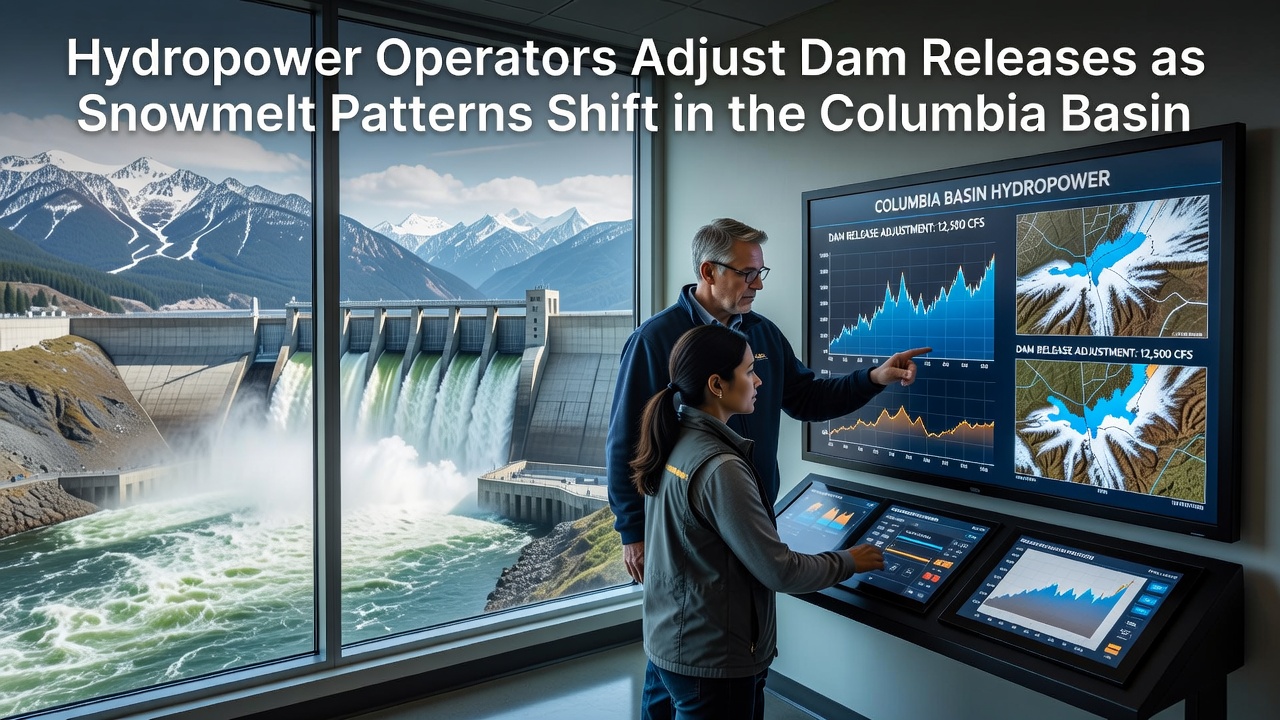
Data from monitoring stations across the Columbia Basin shows snowmelt timing has advanced by several weeks in recent decades, prompting hydropower operators to modify release schedules at major facilities including Grand Coulee and Bonneville Dam, and these adjustments aim to maintain generation capacity while meeting downstream flow requirements for fish migration and irrigation.
Researchers at federal agencies have documented reduced peak snowpack volumes alongside earlier melt onset, which alters the natural hydrograph that dams traditionally relied upon for spring and summer power production, and operators now integrate real-time snow telemetry with climate models to forecast inflow more precisely.
Observed Changes in Basin Hydrology
Long-term records compiled by the Natural Resources Conservation Service indicate that April 1 snow water equivalent in key sub-basins has declined measurably since the 1980s, while the date of peak snowmelt has shifted forward by an average of 10 to 20 days depending on elevation, and this trend creates compressed runoff windows that challenge reservoir storage strategies.
Operators coordinate through the Columbia River Treaty framework, which spans the United States and Canada, to balance power generation with flood risk reduction, and agencies such as the Bonneville Power Administration publish weekly operational plans that reflect updated snowmelt projections.
Operational Adjustments at Major Facilities
At Grand Coulee Dam, release rates have been recalibrated during shoulder seasons to capture earlier inflows before downstream demands peak, while similar protocols at smaller projects like Chief Joseph adjust turbine operations to avoid spillway releases that reduce efficiency, and these changes help stabilize the regional grid during periods when solar and wind output fluctuate.
September 2026 forecasts released by the Northwest River Forecast Center highlight continued reliance on coordinated reservoir drafting to position storage space ahead of potential late-season rain events, and this approach draws on historical analogs from years with comparable snowmelt timing.
Integration of Forecasting Tools
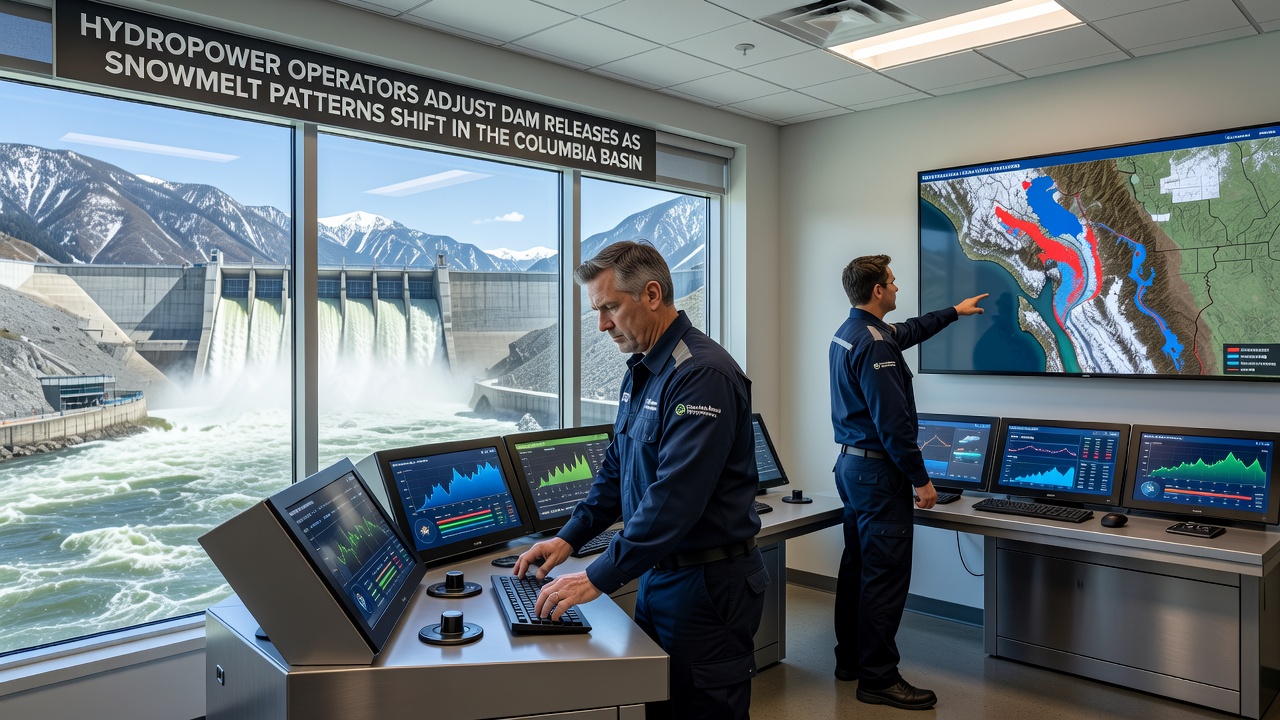
Utilities have adopted ensemble streamflow prediction systems that combine satellite snow cover data with ground observations, allowing finer resolution of inflow volumes weeks in advance, and this modeling reduces uncertainty in day-ahead and week-ahead generation scheduling.
One study from the University of Washington examined how earlier melt affects fish passage windows at lower Columbia projects, revealing that adjusted releases can align better with juvenile salmon outmigration when timed with temperature cues rather than calendar dates alone.
Coordination Across Jurisdictions
Cross-border meetings between the U.S. Army Corps of Engineers, BC Hydro, and provincial regulators establish annual operating plans that incorporate snowpack anomalies, and these sessions review telemetry from over 200 SNOTEL sites to refine volume forecasts before finalizing release curves.
Industry reports note that market prices for hydropower in the Pacific Northwest have shown greater volatility during shoulder months when snowmelt arrives ahead of schedule, prompting some operators to increase use of pumped storage at facilities like the John Day project to shift energy across daily peaks.
Environmental and Regulatory Considerations
Federal biological opinions governing Columbia and Snake River operations require minimum flows and spill volumes that operators must satisfy regardless of inflow timing, and earlier snowmelt has led to more frequent use of voluntary spill agreements to protect listed species while preserving generation.
According to USGS water science assessments, groundwater contributions from snowmelt have also changed in some tributaries, indirectly influencing baseflow that supports reservoir levels later in the season.
Conclusion
Continued monitoring by multiple agencies shows that hydropower operators in the Columbia Basin have developed adaptive release protocols that respond to shifting snowmelt patterns, and these practices integrate updated forecasts with treaty obligations to sustain both power production and ecosystem needs through evolving hydrologic conditions.